What Parking Near Kensington Gardens Is Actually Doing To Your Car’s Paintwork
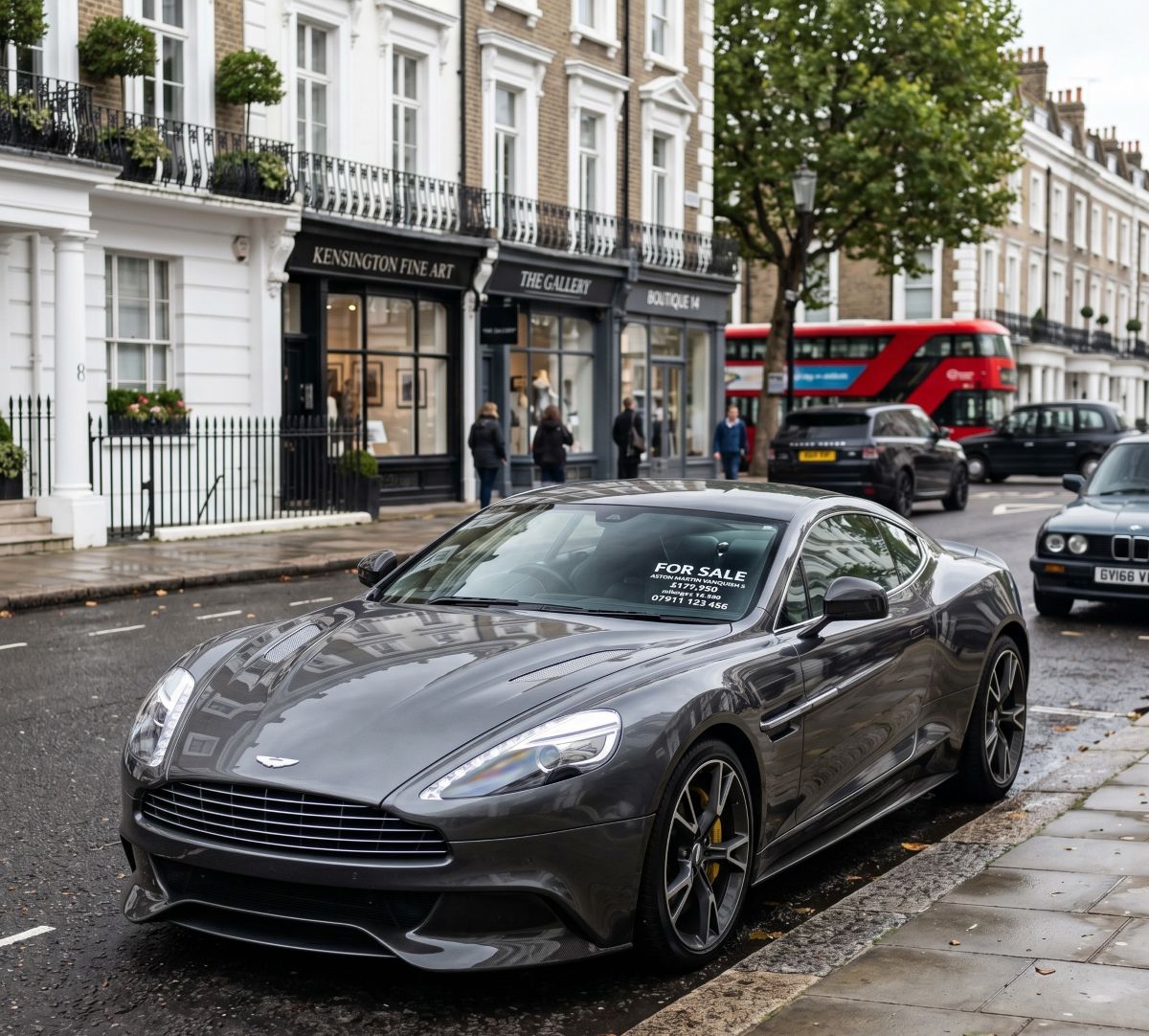
There is a particular type of customer I encounter regularly in the streets closest to Kensington Gardens – usually in the warmer months, usually standing beside their car with a slightly puzzled expression, running a finger along the bonnet and trying to work out where the strange sticky film has come from, or what the constellation of small pale marks on the roof actually is. They are not imagining things. Parking within a few streets of the park – along Kensington Road, up Palace Gate, around the quiet residential blocks behind Queen’s Gate – exposes a car to a specific and largely underappreciated set of hazards that have nothing to do with other vehicles and everything to do with what lives, grows, and falls from the trees overhead.
This is not a gentle warning about a bit of seasonal dust. The combination of biological and environmental threats concentrated along the park boundary causes real, cumulative damage to paintwork – and it tends to be gradual enough that most drivers do not notice until it is well advanced.
The London Plane Tree Problem – Beautiful, Abundant, And Quietly Corrosive
Why The Streets Around Kensington Gardens Are Particularly Affected
Kensington’s tree canopy is one of the things that makes the area genuinely beautiful. The mature London plane trees lining Kensington Road, Palace Gate, and the residential streets fanning out from the park’s southern and western edges are a defining feature of the neighbourhood’s character. They are also, from a paintwork perspective, a persistent source of trouble.
The substance that drops from London planes during the warmer months is widely described as tree sap, but the reality is more specific – and more unpleasant. The sticky, yellowish film that coats cars parked beneath them is primarily honeydew: the sugary excretion of the vast aphid colonies that feed on plane tree foliage throughout summer. It falls in an almost invisible mist, settles on horizontal surfaces, and dries into a clear, hydrophobic film that is considerably harder to shift than ordinary road grime.
Left on paintwork, this film is not merely cosmetic. The sugar compounds it contains are mildly acidic, and over time – particularly through the alternating heat and moisture of a British summer – they begin to compromise the clear coat layer. Cars parked regularly under the canopy along Kensington Road without being washed frequently enough develop a haziness to their finish that polishing can address in early stages but becomes progressively more stubborn to reverse. On darker-coloured cars, where deposits catch oblique light, the effect is particularly visible and particularly dispiriting.
The trees also shed their seed clusters throughout spring and early summer – the small, rough-textured balls familiar to anyone who has walked through the area – which add a physical element to the problem. Brushing them off a dry bonnet, or letting them roll across a wet panel in the wind, introduces fine scratches that compound the chemical damage building up beneath them.
The plane trees are not going anywhere, and neither are the aphid colonies that inhabit them. Understanding the problem is the first step to managing it rather than being quietly surprised by it year after year.
The Bird Population Problem – Parakeets, Pigeons, And The Acid Test
Why Kensington Gardens’ Wildlife Is Harder On Paint Than Most Drivers Realise
Kensington Gardens and the adjoining Hyde Park support one of the densest concentrations of urban bird life in London. Pigeons, crows, and sparrows are a given in any part of the city. But the ring-necked parakeet population – the vivid green birds that have colonised west London’s parks over the past few decades – deserves particular attention, because their roosting behaviour makes the streets bordering the park considerably more hazardous for parked cars than most other parts of the capital.
Parakeets roost in large, vocal groups in the tallest trees along the park boundary, particularly in the stretches closest to Kensington Palace. Unlike pigeons, which distribute themselves relatively evenly, a parakeet flock concentrated in a handful of trees creates a concentrated deposit problem for cars parked directly beneath. Their droppings are larger than those of smaller birds, and a diet heavy in seeds and fruit produces excretion with a notably high uric acid content.
This matters because uric acid is highly corrosive to automotive clear coat. At a pH of between 3 and 4.5 – roughly equivalent to black coffee – fresh bird droppings begin to soften and etch the clear coat within hours on a warm day. The mechanism is not purely chemical: as the deposit dries and contracts in the sun, it physically pulls at the paint surface it has bonded to, leaving a textured imprint that remains visible after the dropping itself has been removed. On prestige cars with softer paint formulations – and Kensington’s streets are full of them – this can happen in a single warm afternoon.
The instinctive response of wiping a dropping off dry is itself damaging. Bird droppings contain grit, seed husks, and other abrasive matter, and dragging this across a dry panel causes fine circular scratches that show badly under direct light. The correct approach is to soften the deposit first with a damp cloth or a quick detailer spray before any lateral movement begins. It takes an extra thirty seconds and saves the clear coat from a problem far more troublesome than the original deposit.
Pollen, Dust, And The Slower Damage Building Up Every Day
The Cumulative Threat That Rarely Gets The Attention It Deserves
Bird droppings and honeydew are visible and immediate. The third category of park-adjacent paintwork damage is slower and quieter – and in some ways more insidious, because it is easy to dismiss as ordinary dirt until its effects have already accumulated well beyond what a simple wash can address.
During spring, the plane trees release significant quantities of pollen, visible as a fine yellow-green dust settling across every horizontal surface within range. Mixed with overnight dew, this forms a dilute paste with a mildly acidic character. A single day’s accumulation is relatively harmless. The issue is one of compounding: vehicles parked in the same location day after day accumulate successive layers, which dry, re-hydrate, and interact with the paint surface continuously over weeks rather than hours.
Kensington Gardens and Hyde Park also generate airborne particulates from their bridleways and exercise areas. The equestrian paths running through Hyde Park – a distinctive feature of this part of London that most neighbouring residents take entirely for granted – use a sand and grit surface that becomes airborne in dry conditions, dispersing fine abrasive particles into the streets immediately bordering the park. Combined with the PM2.5 particulates from the A4 and Kensington High Street traffic wrapping around the park’s perimeter, the air in this part of W8 carries a higher-than-average abrasive load for any car sitting in the open.
The cumulative result is what detailers call bonded contamination – a layer of particulates that has become chemically or physically adhered to the paint surface and cannot be removed by washing alone. Running a clean finger across the bonnet of a car that has sat near the park for several weeks without attention produces a roughness that should not be there on a properly maintained vehicle. Addressing it requires a clay bar treatment to mechanically lift embedded particles without introducing further abrasion. Regular washing, by contrast, interrupts the process before it reaches that stage – the contamination that has been building for a fortnight responds readily to a thorough hand wash, while the contamination of two unattended months is a considerably more involved conversation.
What This Means For How You Look After Your Car
Frequency, Method, And Why Your Postcode Changes Everything
The practical conclusion from everything above is straightforward, even if it is not what most drivers want to hear: parking regularly near Kensington Gardens means your car needs washing more frequently than the London average, and the method matters at least as much as the interval.
How much more frequently? For a car sitting daily beneath plane tree canopy or within consistent reach of the park’s bird population, a proper wash every one to two weeks during the warmer months is a realistic maintenance standard – not a premium indulgence. The biology of what is landing on the car simply does not support longer intervals without some degree of paint compromise accumulating in the background. During the cooler months, when aphid activity and pollen are absent and bird feeding patterns shift, that interval can ease. But London’s year-round pollution, construction dust, and permanent resident bird population mean no month is entirely benign.
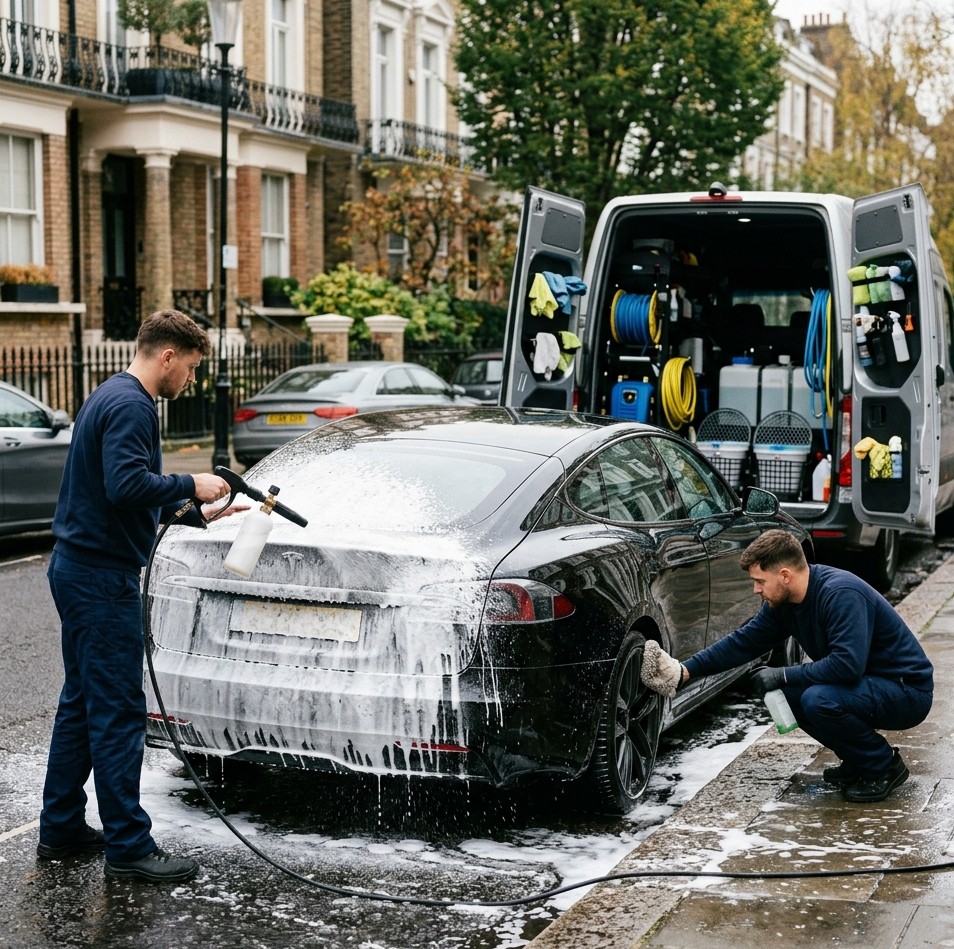
Method matters because of the nature of the contamination being shifted. The grit, seed husks, and abrasive particulates involved in park-adjacent deposits mean that a quick DIY wipe with a dry or semi-dry cloth – the approach most drivers default to – can inflict its own damage while trying to remove someone else’s. A proper hand wash using the two-bucket method, or a waterless product applied with a clean microfibre and correct technique, lifts contamination without dragging it across the surface. When the deposits contain the kind of physical material described above, this is not a minor distinction.
Waterless washing has a particular logic for cars in this location. Because the contamination profile near the park tends to be lighter in overall volume but higher in biological content – honeydew, droppings, pollen – rather than heavy road grime, waterless products are well matched to the task. They encapsulate and lift this type of deposit effectively, and they make it genuinely practical to wash the car as often as the location demands, without the need for a tap, a hose, or a three-hour window on a dry Saturday.
Where you park, in other words, is not incidental to how you maintain a car’s finish. For residents of the streets surrounding Kensington Gardens, it is the defining variable – and treating it as such is the difference between paintwork that holds up gracefully over the years and one that quietly deteriorates while its owner wonders why.